Summary
Additive manufacturing has long stopped being just a prototyping technology. In at least ten industries, 3D printed parts go into end products, in series from thousands to several million units a year.
Hearing aids moved almost entirely to 3D printing ten years ago. Align Technology prints over a million custom orthodontic parts a day. GE Aerospace has delivered over 100,000 printed fuel nozzle tips. BMW has produced over 1.6 million printed parts since 2020. In September 2025 Apple confirmed what had been rumored for two years, and in September 2026 it introduced the iPhone Duo with a 3D printed hinge cover.
Many manufacturers still stay quiet about what they print, and some rumors in circulation are not true. That is why they are kept separate at the end of this article.
Why this article
For ten years I have been hearing the same sentence in meetings across the region: "3D printing is good for prototypes, but not for series production." That sentence was partly true in 2014. It is not true today. The problem is that the evidence is rarely gathered in one place, so everyone repeats what they heard at a trade show five years ago.
Here I have collected only confirmed examples. The criterion is strict: the part must go into an end product sold to a customer, it must be in series production, and there must be a public source with a number or at least a clear statement from the manufacturer. Tooling, molds, prototypes, motorsport and one-off projects are not included.
Overview in one table
| Industry | Company | Indicator | Year |
|---|---|---|---|
| Hearing aids | Sonova | over a million shells a year | 2016 |
| Orthodontics | Align Technology | over a million parts a day | 2025 |
| Orthopedics | Stryker | over 2 million implants since 2013 | 2024 |
| Aircraft engines | GE Aerospace | over 100,000 fuel nozzle tips | 2021 |
| Aircraft structures | Airbus, Norsk Titanium | serial integration on the A350 | 2026 |
| Aircraft structures | Liebherr-Aerospace | landing gear brackets for the A350 | 2019 |
| Automotive | BMW Group | over 1.6 million parts since 2020 | 2026 |
| Footwear | adidas, Carbon | over a million midsoles | 2023 |
| Rockets | Rocket Lab | 1,000th Rutherford engine | 2026 |
| Drone engines | Beehive Industries | target of over 8,000 engines a year | 2026 |
| Phones | OPPO, BLT | 300 hinges in 25 hours, 13 parts into one | 2025, 2026 |
| Watches and phones | Apple | over 400 tonnes of titanium saved a year | 2025 |
Medicine, the industry that went all the way first
Hearing aids are the clearest example of complete conversion. Sonova, owner of the Phonak and Unitron brands, was already printing over a million unique shells a year on more than a hundred DLP machines in 2016. More interesting than the number is the speed: the whole industry moved from manual work to a digital workflow in less than two years. In 2017 Phonak also introduced a titanium shell made by powder bed fusion, with walls as thin as 0.2 millimeters, half the thickness of acrylic.
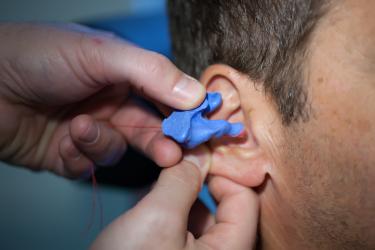 Image source: Sonova / Phonak, the first asset from the cited source page.
Align Technology, the company behind Invisalign aligners, is probably the largest single application of mass customization in the world. According to Srini Kaza, Executive Vice President of R&D, Align produces over a million custom parts every day. Most aligners are thermoformed over a 3D printed model, and the company has already launched its first directly printed device. In one quarter of 2026 it shipped a record 685,700 new cases.
In orthopedics, Stryker has implanted over two million printed implants with a porous Tritanium structure that mimics cancellous bone since 2013, including over a million cementless knee replacements. DePuy Synthes, NuVasive, Zimmer Biomet and others also have printed implants. It is important to stress that 3D printing was not chosen here for cost, but because a porous structure for bone ingrowth cannot be made conventionally. Series production does not mean there are no problems, though. The same manufacturer recalled a printed lumbar cage in 2018, which I wrote about in Biocompatible materials and real applications in surgery.
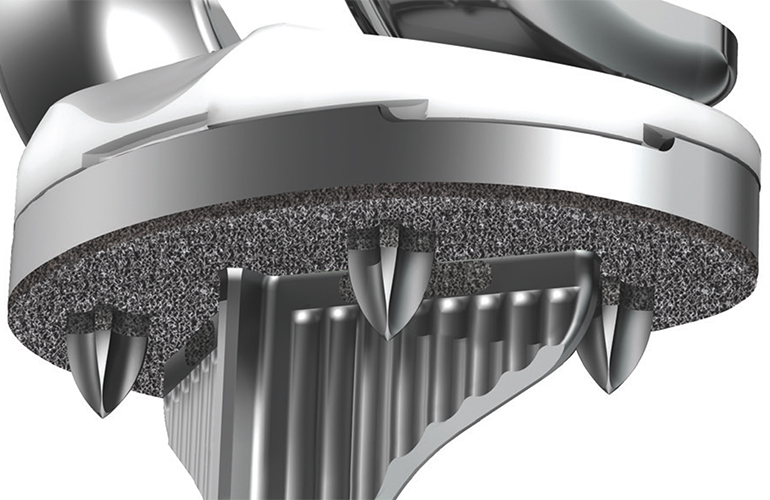 Image source: Medical Design and Outsourcing, the first asset from the cited source page.
Aerospace and space, the oldest proof of high-volume metal production
In 2015 GE Aerospace started series production of the fuel nozzle tip for the CFM LEAP engine at its plant in Auburn, Alabama, using powder bed fusion. One printed part replaced 20 welded components and is 25 percent lighter. The 100,000th part was delivered in August 2021. Every LEAP engine has 18 or 19 of these nozzles. This is the most frequently cited example in the industry, and for good reason, because it proves qualification, repeatability and economics in the most strictly regulated branch of manufacturing. The same nozzle also goes into military engine variants, more on that in Metal 3D printing in the defense industry. The differences between powder bed fusion and its most common alternative are described in Metal additive manufacturing, Powder Bed Fusion vs Binder Jetting.
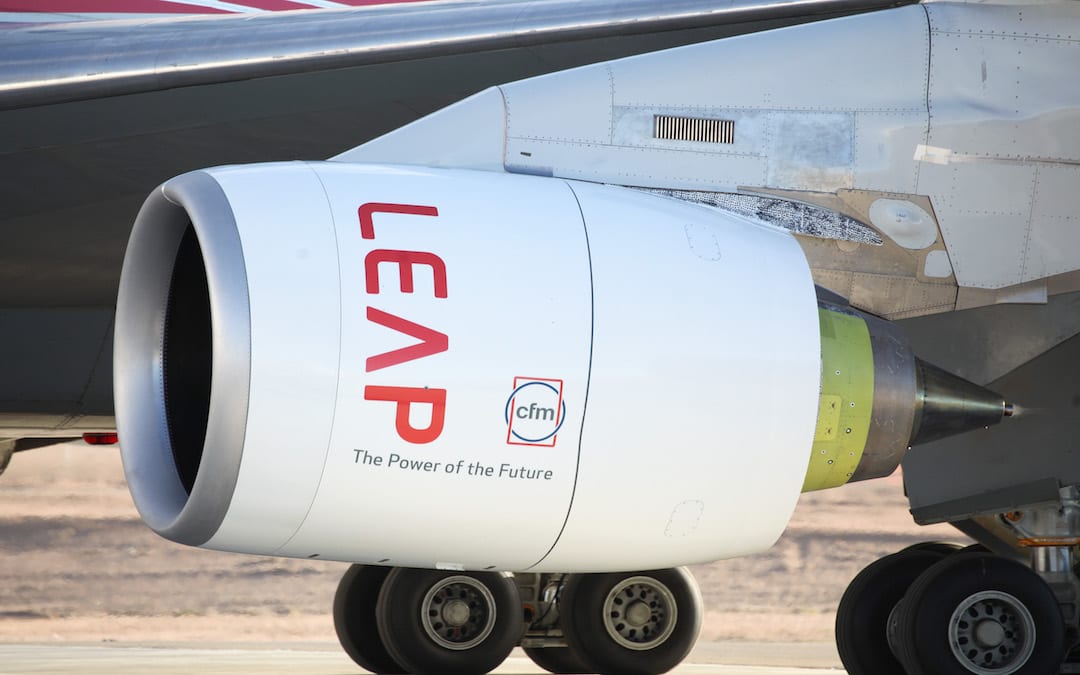 Image source: GE Aerospace News, the first asset from the cited source page.
Airbus installed its first printed titanium bracket on a series A350 back in 2017. The real turning point came in January 2026, when serial integration of large titanium structural parts began in the cargo door surround area of the A350. The parts are made by Norsk Titanium, using plasma wire deposition (wire DED). This is the step from small brackets to large, loaded parts. Since 2017 Norsk Titanium has also delivered FAA certified structural parts for the Boeing 787, with savings the company itself estimates at 2 to 3 million dollars per aircraft.
Airbus does not rely on a single supplier for this. Since 2019 Liebherr-Aerospace has been supplying printed titanium nose landing gear brackets for the A350 in series. At the end of 2024, China's BLT won a contract for series production of large, complex superalloy parts for the Airbus A320, on its own machines.
In space, Rocket Lab produced its thousandth Rutherford engine in May 2026, the first 3D printed orbital rocket engine with electric pumps. Every Electron rocket carries ten of these engines, and over 800 have already flown. The larger Archimedes engine for the Neutron rocket also has printed turbopump housings, thrust chamber and valve housings. In China, BLT prints more than 30 titanium and other critical parts for Orienspace's Gravity-1 rocket. Relativity Space launched Terran 1 in 2023, a rocket that was 85 percent 3D printed by mass. The company later changed its strategy for the next, larger rocket, which is a business decision, not a failure of the technology.
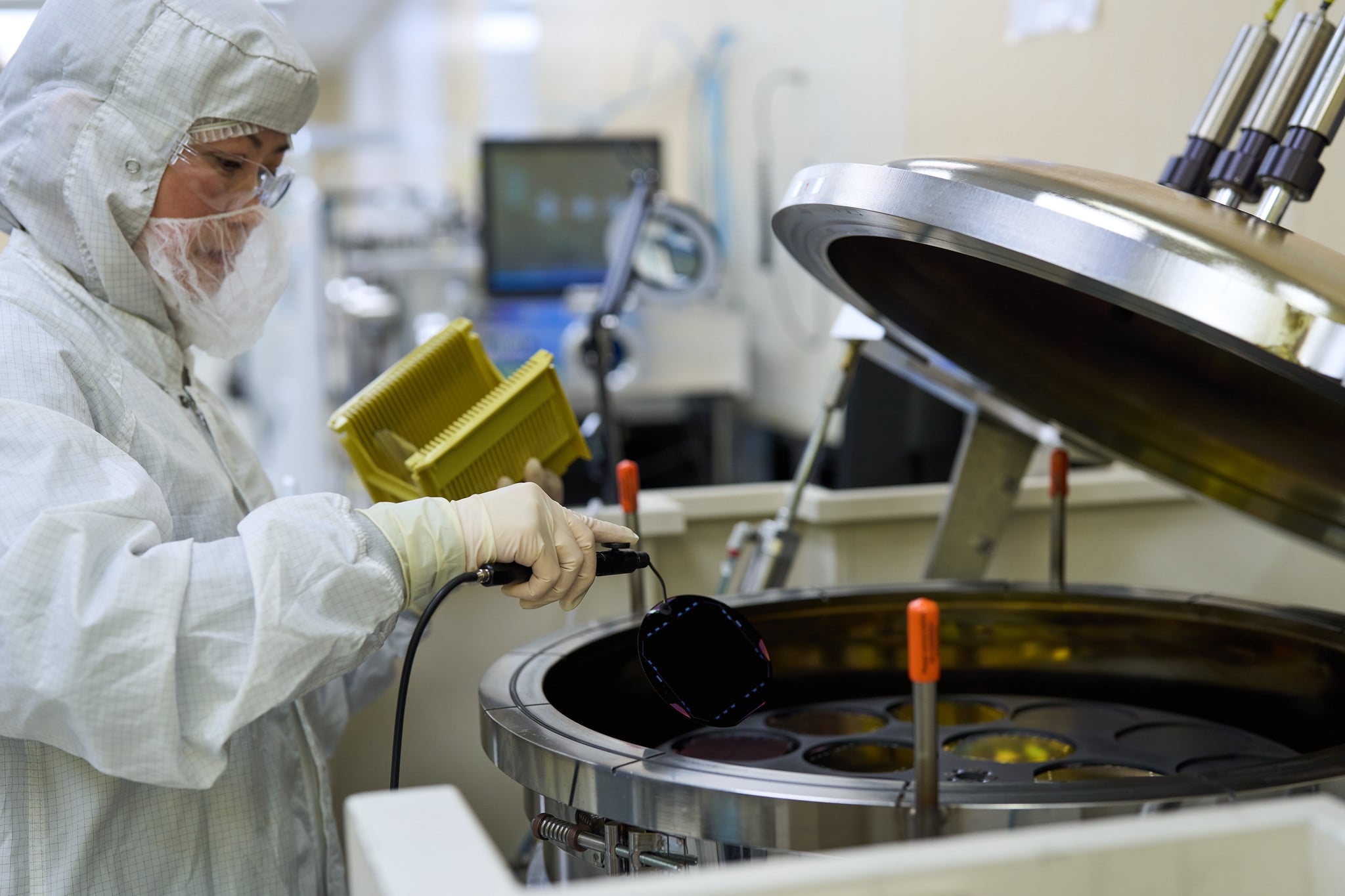 Image source: Rocket Lab, the first asset from the cited source page.
The newest example comes from defense. Beehive Industries prints jet engines for uncrewed aircraft. In April 2026 it won a production contract from the US Air Force, ordered 30 new EOS metal machines and set a target of over 8,000 engines a year. For now that is a target, not achieved production. The direction is clear, though: the US Department of Defense's budget request for 2026 allocates 3.3 billion dollars to projects involving additive manufacturing, 83 percent more than the year before.
Automotive, BMW as the benchmark
BMW Group has used 3D printing since 1991. Since opening its Additive Manufacturing Campus near Munich in 2020 it has produced over 1.6 million parts, and about 100,000 more a year are printed decentrally in its vehicle plants. The window guide rail for the i8 Roadster was printed with Multi Jet Fusion, up to 100 a day. For a vehicle entering production in 2027, BMW developed a center console carrier that combines seven parts into one, printed by large-format granulate extrusion from PA11 with recycled carbon fiber, at around 18,000 units a year. Series production of larger metal parts with WAAM is planned from 2027.
 Image source: BMW Group PressClub, the first asset from the cited source page.
Divergent, the company behind the Czinger brand, supplies Aston Martin and Mercedes AMG with printed aluminum structural parts. The Cadillac Celestiq has 115 printed parts, but it is built in very small numbers.
Motorsport and demonstrators are not part of this overview, but they are a good indicator of what the technology can do. In 2018 Bugatti presented a printed titanium brake caliper, Porsche developed printed pistons for the 911 GT2 RS with MAHLE and TRUMPF, Honda used printed Inconel turbine housings in its Formula 1 power unit, and Ford printed over a thousand test parts for the development of the 2026 Red Bull power unit.
It is fair to say this plainly. The automotive industry has come a long way, but it is not yet at the level of aircraft engines or medicine in terms of the share of vehicles with printed parts. To enter series production in automotive, a part has to pass the same approval procedure as any other, which I wrote about in How a single part gets qualified for production.
Footwear and consumer products
Carbon and adidas have passed a million produced 4D midsoles, made with Digital Light Synthesis, a vat photopolymerization process like DLP and SLA. Carbon's Phil DeSimone called them probably the largest serial 3D printed consumer product in the world. The 4DFWD model uses a lattice selected from five million possible combinations. New Balance and Under Armour have also launched models with printed midsoles, but in smaller series.
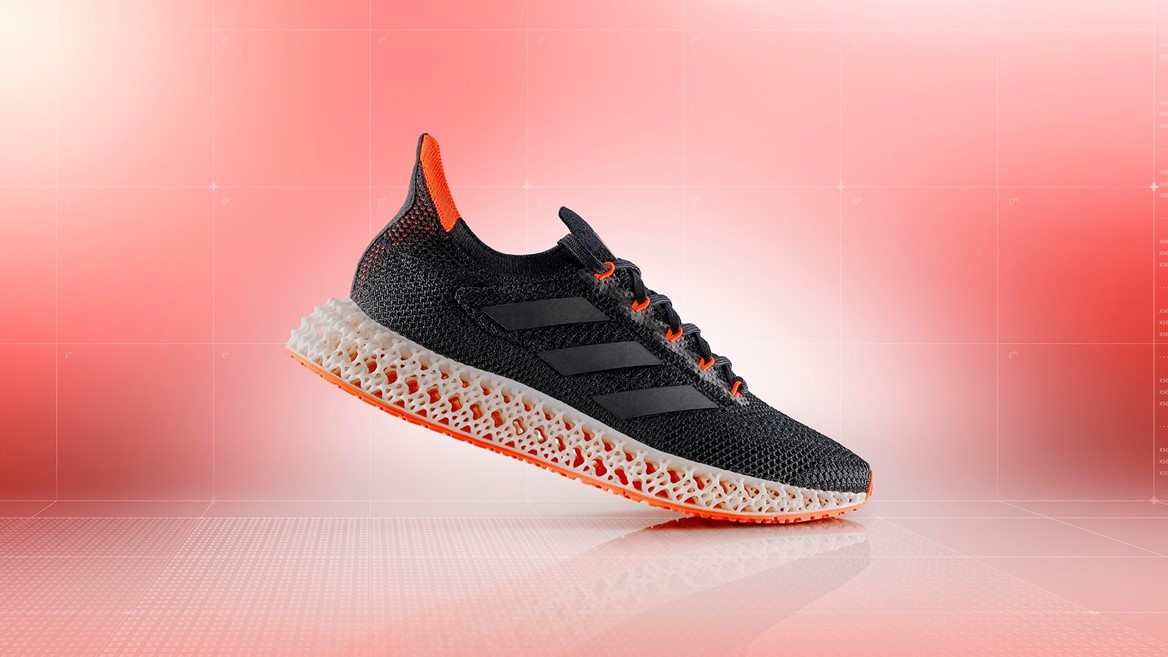 Image source: adidas News, the first asset from the cited source page.
Jewelry is one of the oldest applications. Printing wax and resin patterns for investment casting is now standard in jewelry factories, and direct printing in gold and platinum is growing. In eyewear, Hoya with its Yuniku system, Fitz Frames and Mister Spex print frames fitted to the face. Hoya states that Yuniku produces up to 70 percent less waste than conventional frame making. Fitz Frames prints hundreds of custom glasses a week, You Mawo makes polyamide frames on EOS machines, and Hoet makes titanium frames with metal 3D printing.
Series production of polymer parts most often uses powder sintering technologies. What such a machine costs is described in How much does an industrial SLS/MJF/SAF printer really cost.
Phones, the year everything changed
This is the part of the story that interests me most, because it is where the gap between what is done and what is admitted is most visible.
Working with the Chinese company BLT (Bright Laser Technologies), OPPO introduced a printed titanium hinge in the Find N5 in February 2025. Part of the hinge is half as thick, from 0.3 to 0.15 millimeters, and BLT prints 300 hinges in 25 hours on multi-laser machines. The Find N6 followed in March 2026. In the N6, the so-called wing plates of the hinge, which would conventionally require 13 machined parts, are combined into one printed structure, with 50 percent better flatness of the supporting surface compared with the previous generation. OPPO also uses a second, completely different process it calls 3D Liquid Printing: it laser-scans the hinge surface, then deposits photopolymer droplets onto uneven areas in more than 20 cycles, reducing height variation from 0.2 to 0.05 millimeters. Honor introduced a printed titanium hinge, serially printed by the Chinese company Hanbang, back in 2023 in the Magic V2.
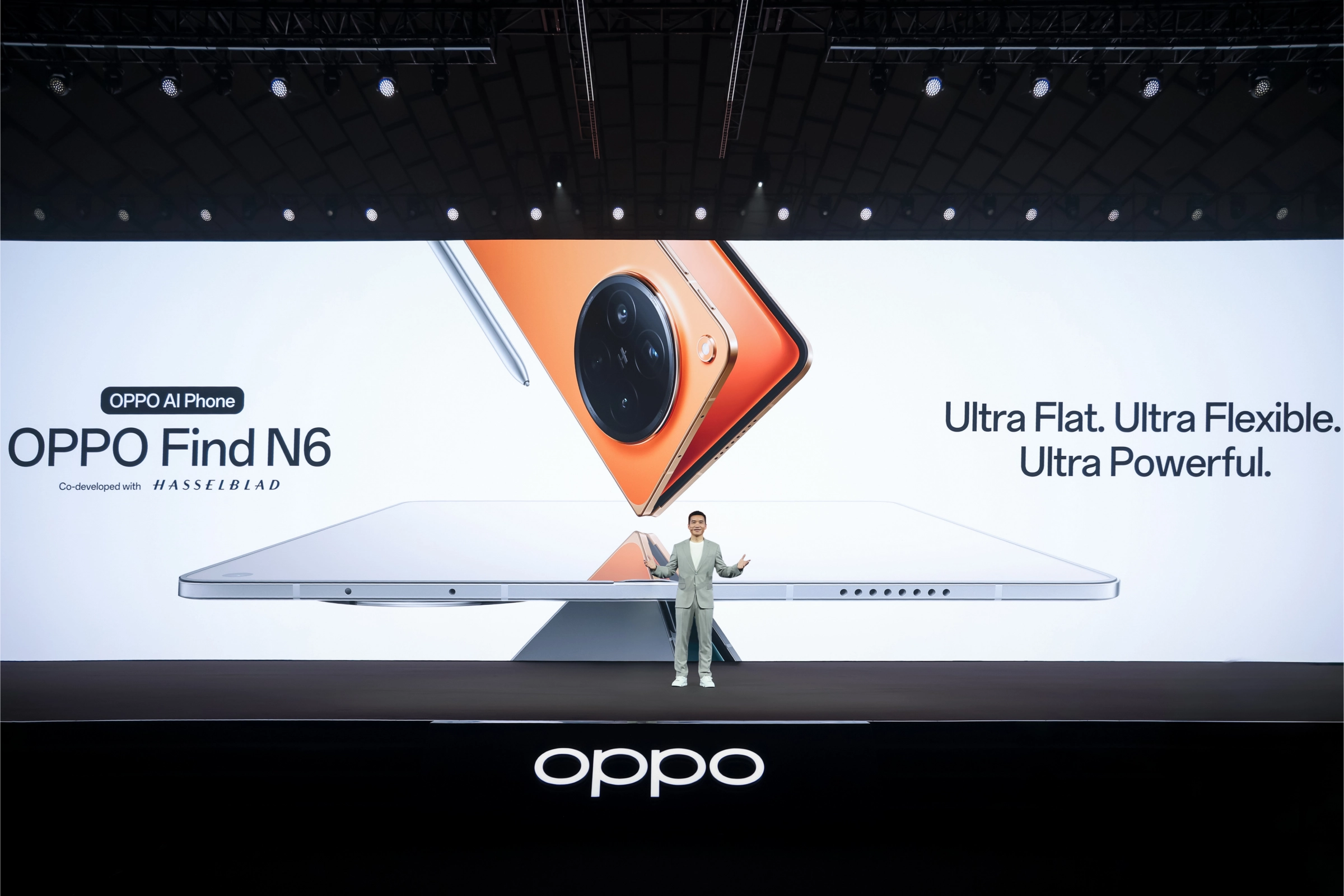 Image source: OPPO Global Newsroom, the first asset from the cited source page.
On 9 September 2025 Apple confirmed that the cases of the Apple Watch Ultra 3 and Series 11, as well as the USB C port of the iPhone Air, are 3D printed from 100 percent recycled titanium. Each case has over 900 layers of 60 microns, is printed on machines with six lasers and uses half the raw material of the previous generation. Apple estimates savings of over 400 tonnes of raw titanium a year. Exactly one year later, on 9 September 2026, Apple introduced the iPhone Duo, its first foldable phone. The hinge cover is printed from recycled titanium by laser powder bed fusion, and to flatten the display Apple uses the same principle as OPPO: a laser scans every unit, then up to 25 micro layers of photopolymer are applied. Shipping starts on 23 October.
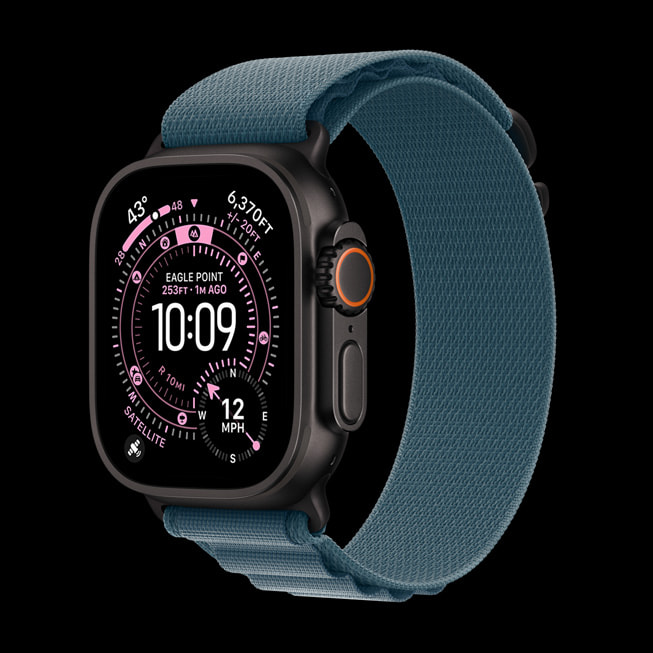 Image source: Apple Newsroom, the first asset from the cited source page.
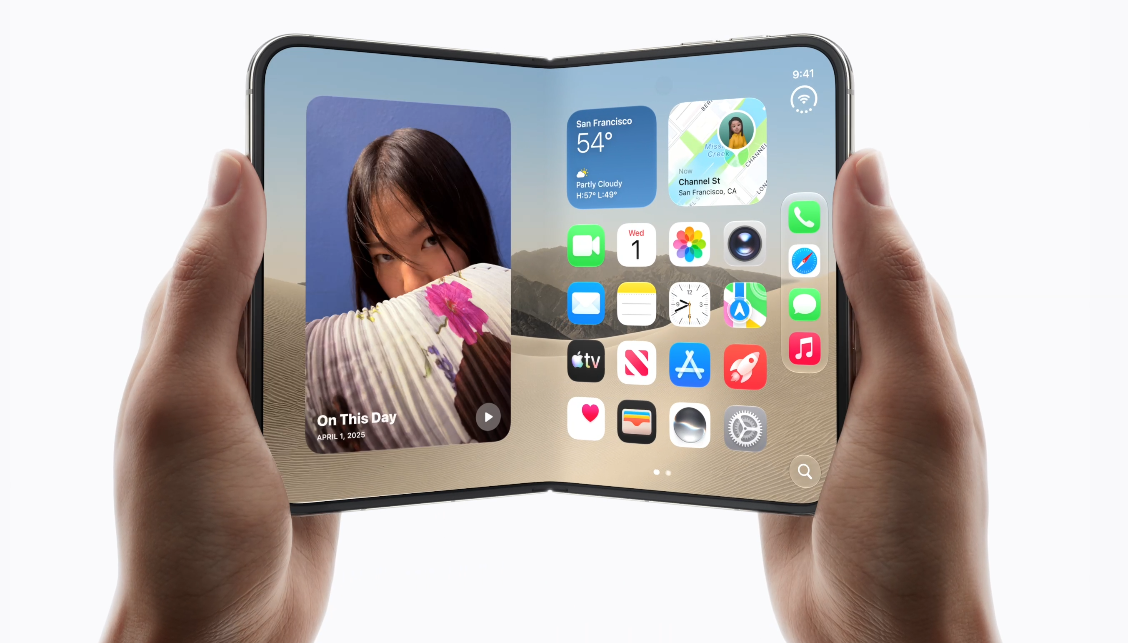 Image source: 3D Printing Industry / Apple, the first asset from the cited source page.
According to its sales partner, BLT also prints titanium shells for EarFit earphones and a hinge for a thin laptop for an undisclosed brand. Phones are just the most visible part of consumer electronics that is being printed.
Samsung, Xiaomi and Huawei currently have no officially confirmed 3D printed part in series production. In the Galaxy Z Fold8, Samsung uses a titanium film under the display and machined metal plates, and does not mention 3D printing.
Rumors, and why many did not want to admit it
Everything above is confirmed. What follows is not, and I say so clearly.
Apple is the best example of the gap between rumor and admission. Analyst Ming Chi Kuo claimed back in 2023 that Apple was introducing 3D printing for the Apple Watch Ultra and named BLT and Farsoon as suppliers. Apple stayed silent for two years, until September 2025. In that period, an AM Research report on Chinese additive manufacturing stated that an unnamed production service was already making millions of small metal parts for an unnamed phone company. The context was clear to everyone, but there was no official confirmation.
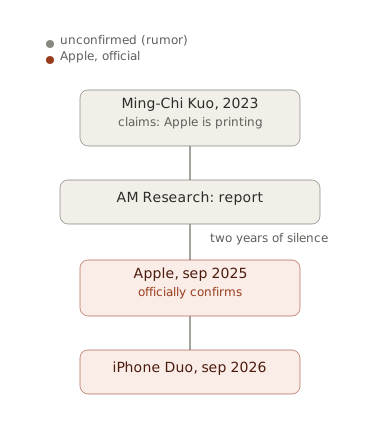 The gap between the first rumor of Apple 3D printing and the official admission.
Why do companies stay quiet? Two reasons keep coming up. The first is customer perception. As soon as Apple announced the printed watch case, forum comments appeared saying the watch was now less durable. That is why Apple's communication stressed years of testing, hot isostatic pressing and CNC finishing. The second reason is trade secrecy. The manufacturing process is a competitive advantage, and nobody has an interest in explaining it.
There is also a noticeable cultural difference. Chinese companies, above all BLT, Farsoon and HBD, openly publish who they print for and how much, while Western manufacturers and their suppliers mostly do not.
And one important warning. Claims circulate that Samsung, Xiaomi and Huawei are "secretly printing hinges". There is no evidence for this. These rumors confuse titanium as a material with additive manufacturing as a process. For the hinge of the Mate XT, Huawei explicitly states steel with a strength of 1900 MPa. The only confirmed Chinese phone makers with printed hinge parts are OPPO and Honor.
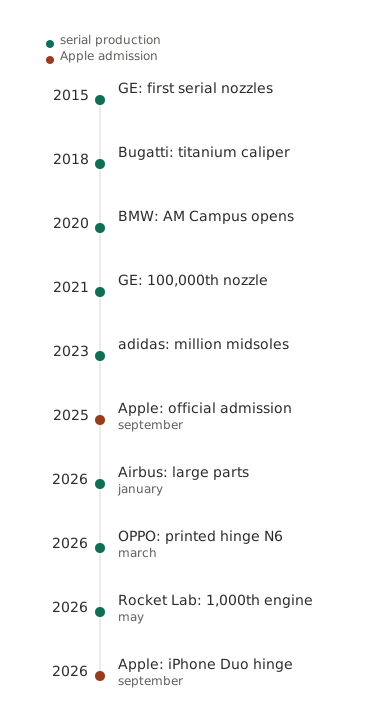 Timeline of serial production and Apple admissions, 2015-2026.
What this means for companies in the region
None of these companies started with a million units. They all started with one part that could not be made conventionally, was too expensive, or required too much assembly. Then they qualified it, and then multiplied it. What that step looks like, I described in What process qualification looks like in practice.
The question for your production is not "are we big enough for 3D printing", but "which of our parts has too many components, too much waste or too long a supply chain". If you want to go through that together, see the production analysis, and you can check a metal part yourself for free in the SLM DFAM Checker.
Frequently asked questions
Is 3D printing cost-effective for large series? For parts where it brings consolidation of several parts into one, weight savings or geometry that conventional machining cannot produce, yes. GE, Stryker, Align and BMW prove it at tens of thousands to millions of units a year. For simple parts that injection molding makes for a few cents, no.
Which industry has the largest volume of 3D printed parts? Dental and orthodontic, led by Align Technology with over a million parts a day. Hearing aids have the highest share of conversion, practically complete.
Are printed metal parts weaker than forged or machined ones? A properly qualified part from powder bed fusion, with hot isostatic pressing where needed, has mechanical properties comparable to cast parts, and often to forged ones. The GE fuel nozzle has been flying since 2016.
Which phones and watches have 3D printed parts? Confirmed: OPPO Find N5 and N6, Honor Magic V2, Apple Watch Ultra 3 and Series 11, iPhone Air and iPhone Duo. Samsung, Xiaomi and Huawei have no confirmed examples.
Does Samsung use 3D printing for hinges? According to available data, no. Rumors about it confuse titanium as a material with 3D printing as a process.
Sources
- Sonova, 3D printing of hearing aids: https://www.sonova.com/en/story/innovation/3d-printing-technology-improved-hearing
- Phonak Virto B-Titanium, 2017: https://www.3ders.org/articles/20170304-3d-printed-phonak-virto-b-titanium-is-the-smallest-phonak-in-the-ear-hearing-aid-ever.html
- Align Technology, a million parts a day, 2025: https://orthodonticproductsonline.com/treatment-products/aligners/inside-align-technols-million-custom-appliances-a-day-3d-printing-operation/
- Align Technology, record quarter: https://3dprint.com/325735/3d-printing-financials-aligns-growth-runs-on-volume/
- Stryker Tritanium: https://www.medicaldesignandoutsourcing.com/stryker-tritanium-cementless-knee-implant-3d-printing-surgical-robotics/
- GE Aerospace, 100,000th nozzle: https://manufactur3dmag.com/ge-aviation-produced-its-100000th-3d-printed-fuel-nozzle-tip/
- Airbus and Norsk Titanium, A350, 2026: https://airpronews.com/2026/01/23/airbus-starts-serial-production-of-large-titanium-3d-printed-a350-parts/
- Rocket Lab, 1,000th Rutherford engine: https://www.metal-am.com/rocket-lab-produces-its-1000th-rutherford-engine/
- Liebherr-Aerospace, series production for the A350: https://www.liebherr.com/en-us/n/liebherr-aerospace-starts-serial-production-of-3d-printed-components-24984-3782185
- BLT, Airbus A320 contract: https://www.metal-am.com/blt-secures-airbus-a320-serial-production-contract/
- BLT, customer examples: https://www.goengineer.com/blog/whos-printing-the-future-10-companies-using-blt-metal-3d-printing
- OPPO Find N5 and BLT: https://www.metal-am.com/blts-metal-additive-manufacturing-helps-oppo-build-thinnest-foldable-smartphone/
- US Department of Defense budget for 2026: https://3dprintingindustry.com/news/analysis-of-u-s-military-budget-shows-increased-commitment-to-additive-manufacturing-241651/
- Rocket Lab, 800 engines launched and Archimedes: https://www.voxelmatters.com/rocket-lab-targets-1000th-rutherford-engine-launch-as-am-scales-from-electron-to-neutron/
- Beehive Industries, 2026: https://www.forbes.com/sites/carolynschwaar/2026/07/22/beehive-pushes-3d-printed-drone-jet-engines-into-full-production/
- BMW Group, additive manufacturing 2026: https://www.bmwgroup.com/en/news/general/2026/additive-manufacturing.html
- BMW, center console carrier: https://manufactur3dmag.com/bmw-group-3d-printed-center-console-2027/
- Honda, printed turbine housings: https://www.tctmagazine.com/honda-lifts-hood-on-use-of-metal-3d-printing/
- Ford and Red Bull, test parts: https://www.topgear.com/car-news/formula-one/ford-3d-printing-parts-2026-red-bull-f1-car
- adidas 4DFWD and Carbon: https://www.carbon3d.com/resources/case-study/introducing-adidas-4dfwd-the-worlds-first-3d-printed-anisotropic-lattice-midsole-designed-to-move-you-forward
- OPPO Find N6 and BLT: https://3dprintingindustry.com/news/blt-helps-develop-oppo-find-n6-hinge-with-titanium-3d-printing-250871/
- OPPO 3D Liquid Printing: https://www.voxelmatters.com/oppo-find-n6-uses-3d-liquid-printing-to-eliminate-foldable-display-crease/
- Apple, 3D printed Apple Watch cases: https://www.apple.com/newsroom/2025/11/mapping-the-future-with-3d-printed-titanium-apple-watch-cases/
- iPhone Duo, hinge cover: https://3dprintingindustry.com/news/apple-brings-two-distinct-3d-printing-processes-to-the-hinge-of-its-first-foldable-iphone-254601/
- Apple, BLT rumors: https://3dprint.com/310587/apple-watch-to-use-mass-3d-printed-metal-parts-from-chinas-bright-laser-technologies/
- Honor Magic V2, printed hinge: https://www.voxelmatters.com/honor-will-3d-print-the-titanium-hinges-of-the-new-magic-v2/
- Hoya Yuniku: https://www.hoyavision.com/vision-products/yuniku/
- Samsung Galaxy Z Fold8, construction: https://www.samsungmobilepress.com/articles/galaxy-z-fold8-lightest-foldable-engineering
- Huawei Mate XT, hinge specification: https://consumer.huawei.com/en/phones/mate-xt-ultimate-design/